
There’s a small but critical moment in implant dentistry that patients rarely see — the impression. It’s the step where the shape of your mouth gets captured, and the accuracy of that capture determines everything about how your crown fits, feels, and functions for years to come. For a long time, that process involved putty-like materials pressed into your mouth, a few uncomfortable minutes of holding still, and a physical mold shipped off to a lab. Today, that process looks completely different, and the results reflect it.
Digital scanning has changed how implant crowns are designed and fabricated, and the shift matters more than it might seem on the surface.
Why the Impression Step Matters So Much
Getting a dental crown right starts long before any porcelain is shaped or milled. It starts with how accurately your implant dentist captures the position of your implant, the surrounding teeth, your bite, and the soft tissue around the implant site. That information becomes the blueprint for your crown.
With traditional impressions, that blueprint is made using physical materials — silicone or polyether putty that can shrink, distort, or deform slightly during the setting process, or even during shipping to the dental laboratory. Those small distortions can translate into crowns that require multiple adjustments at delivery, or in some cases, need to be remade.
If you’ve been researching dental implants in Maize, you’ve probably come across terms like “digital workflow” and “same-day impressions.” They represent a different approach to capturing the data used to build your restoration.
How Digital Scanning Works at the Implant Site
A handheld intraoral scanner captures thousands of images per second, stitching them together into a precise three-dimensional model of your teeth, implants, and surrounding tissue. There’s no tray, no putty, no need to hold your breath while the material sets.
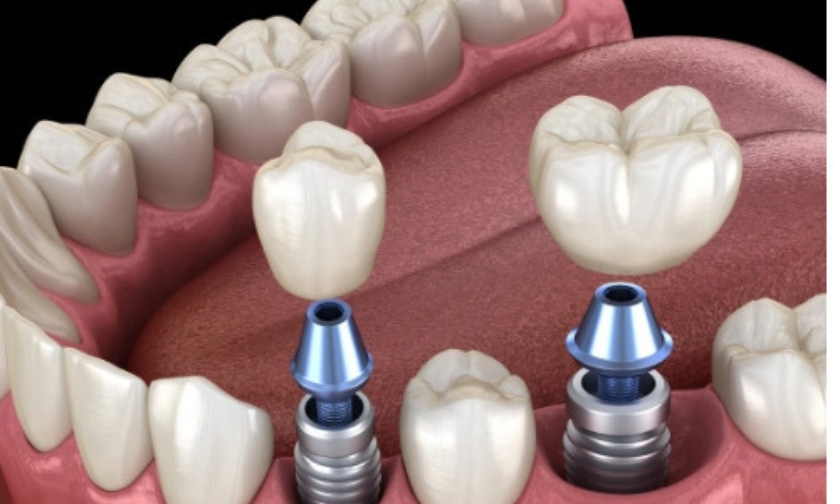
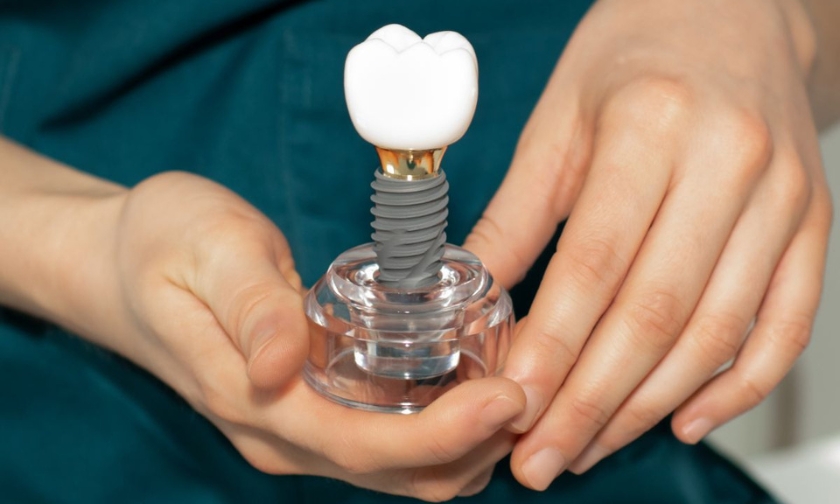
At the implant site, a small component called a scan body is attached to your implant. The scanner reads the geometry of the scan body, which tells the software where your implant sits in relation to the rest of your mouth — its angle, depth, and position. That data feeds directly into CAD/CAM (computer-aided design and manufacturing) software, where a technician or the software itself designs the crown to match your bite and adjacent teeth with a high degree of precision.
The completed design is then sent to a dental lab or milling unit digitally — no physical mold to pack, ship, or hope arrives undamaged.
Why Fit Matters Beyond Comfort
A well-fitting implant crown isn’t just about comfort, though that’s certainly part of it. Crown fit directly affects the long-term health of your implant. Gaps or microfractures in the marginal seal (the junction between crown and implant) can allow bacteria to accumulate in areas that are nearly impossible to clean. Over time, that bacterial buildup can contribute to peri-implantitis, which is inflammation around the implant that, if left untreated, can threaten the implant’s longevity.
Passive fit (meaning the crown sits correctly without placing stress on the implant) also matters. An ill-fitting crown can place uneven pressure on the implant post and surrounding bone, affecting osseointegration over time.
This is part of why the impression step, which can feel like a minor detail in a longer process, actually sits at the center of long-term implant success.
What Happens If Adjustments Are Needed
Even with digital scanning, some minor occlusal adjustments at crown delivery aren’t unusual — biting dynamics can shift slightly, and every patient’s bite is dynamic rather than static. What digital scanning reduces is the need for major remakes or repeated try-in appointments due to impression errors. The precision of the digital model means the crown arrives at its final position much more closely from the start.
Combining Digital Scanning With an Extensive Digital Workflow
Digital scanning doesn’t work in isolation. Its true efficiency shows up when it’s integrated into a complete digital workflow — from cone-beam CT imaging that maps bone structure to digital implant planning software to CAD/CAM crown fabrication. Each step informs the next, and the accuracy compounds.
Dental implant patients in Maize who receive treatment through a fully digital workflow benefit from this end-to-end precision. The implant is placed based on a surgical plan informed by detailed 3D imaging. The crown is then designed based on a scan that reflects exactly where that implant landed. The two data points speak the same language, which reduces the room for discrepancies that can creep in when analog and digital steps are mixed.
Digital scanning is one piece of a carefully coordinated process, and it’s worth understanding before you commit to treatment. If you’re considering dental implants and want to know what the step-by-step process looks like at Newton Dental Studio, arrange a consultation to get a clear picture of your options before making any decisions.
People Also Ask
Does digital scanning cost more than traditional impressions for implant crowns?
Digital scanning is often included in the overall implant treatment fee rather than billed separately. Some practices may charge differently, so it’s worth asking during your consultation. What patients often find is that any marginal difference in upfront cost is offset by fewer adjustment appointments and a lower likelihood of needing a crown remade.
How long does a digital implant impression take compared to a traditional one?
A digital scan at the implant site typically takes two to five minutes, depending on how many teeth need to be captured. A traditional impression, including preparation, setting time, and cleanup, often takes fifteen to twenty minutes or longer. The scan is also immediately available — there’s no waiting for materials to set.
Can digital scans be used for full-arch implant restorations, not just single crowns?
Yes, though the complexity increases with more implants. Research shows digital impressions work well for short-span and single-implant restorations. For full-arch cases with multiple angulated implants, the technology continues to improve, and some practices combine intraoral scanning with photogrammetry to achieve greater accuracy over longer spans. Your implant dentist will recommend the most appropriate technique for your specific case.
How is a scan body different from a regular impression coping?
A scan body (sometimes called a scan abutment) is a specifically shaped component designed for optical scanning rather than physical impressions. Its geometry is pre-programmed into the CAD/CAM software, so when the scanner reads the scan body, the software immediately knows the exact spatial orientation of your implant. Traditional impression copings transfer position to physical plaster or stone — a scan body transfers that same information digitally.
What if I need a bone graft before my implant — does that affect when digital scanning happens?
The digital scan for your implant crown occurs after the implant has been placed and has integrated with the bone — not before or during the bone graft phase. The graft and healing period come first. Once your implant is stable and the healing abutment has shaped the surrounding tissue, that’s when an impression (digital or conventional) is taken to capture the final picture for your crown.