
Losing most or all of your teeth changes more than just how you look. It changes how you eat, how you speak, and, if you’re honest about it, how comfortable you feel walking into a room full of people. The good news is that tooth replacement has come a long way. Two of the most common implant-based options patients consider are All-on-4/6 implants and traditional individual dental implants. While both are anchored into bone, they couldn’t be more different in how they work, who they’re built for, and how they hold up over time.
If you’re weighing your options and want an honest comparison, here’s what you need to know.
What Each Option Is
Before comparing the two side by side, it helps to be clear about what each treatment actually involves.
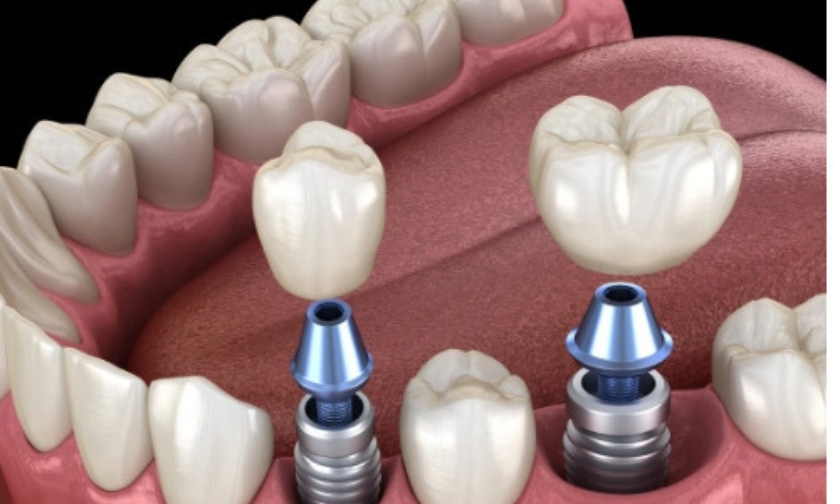
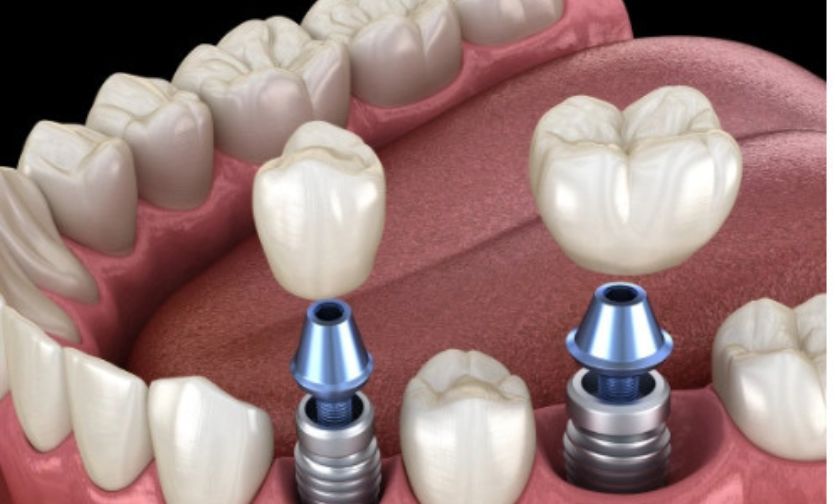
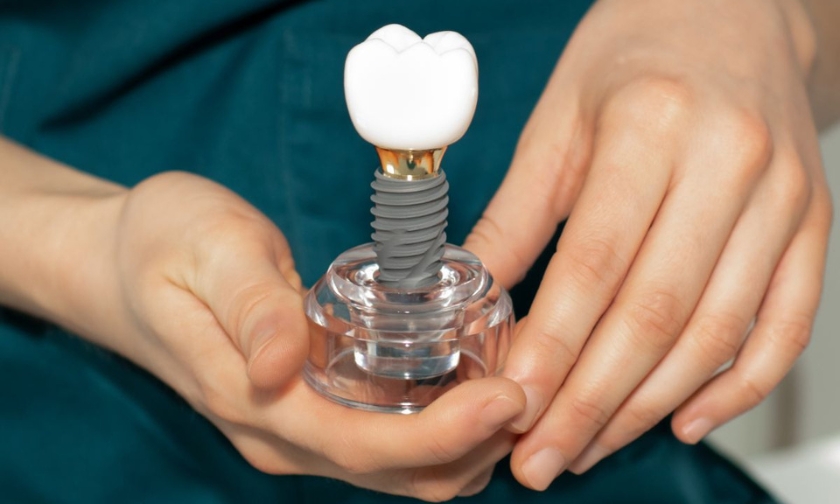
Traditional dental implants place one titanium post into the jawbone for each missing tooth. Once the implant fuses with the bone through osseointegration — a process that typically takes several months — a custom crown, bridge, or smaller restoration is attached on top. Because each implant functions independently, traditional implants closely replicate the look, feel, and strength of natural individual teeth. They’re a highly versatile solution, appropriate for patients missing one tooth, a few teeth, or even larger sections of the arch when combined with a bridge.
All-on-4/6 is a different category of treatment entirely. Rather than replacing each tooth individually, four to six strategically placed titanium implants support a complete fixed arch of replacement teeth. The rear implants are angled up to 45 degrees, allowing them to take advantage of areas with the highest bone density and reducing or often eliminating the need for bone grafting. The result is a full arch of fixed teeth that stay in your mouth, function like natural teeth, and can often be delivered on the same day as the implant surgery.
That foundational difference — one implant per tooth versus a few implants supporting an entire arch is what drives nearly every other comparison between the two.
Stability and Daily Function
This is where the contrast becomes most apparent for patients in everyday life.
Traditional implants, when placed for individual tooth replacement, provide an exceptional level of function. Because each implant has its own dedicated root, biting forces are distributed naturally and independently. Patients most often describe the result as feeling closest to their original teeth, which makes sense — the treatment is essentially replicating the structure of what was lost.
All-on-4/6 implants are also fixed and bone-anchored, meaning they don’t shift, don’t require adhesive, and allow for a significantly stronger bite than any removable option. Because four to six implants share the load of a full arch, chewing forces are distributed across the prosthesis rather than directed through individual roots. For patients who have lost most or all of their teeth, this level of stability is transformative and far beyond what dentures can offer.
For patients in Newton, KS, considering dental implants, the right choice between these two approaches depends less on which is “better” in isolation and more on how many teeth need replacing and what your jaw can support.
Bone Requirements: Who Qualifies for Each
Bone density and volume play a central role in determining which treatment is the right clinical fit, and this is where the two options diverge significantly.
Traditional individual implants are placed vertically, directly where each missing tooth was located. That placement requires adequate bone density and volume at each specific implant site. Patients who have experienced bone loss in certain areas may need bone grafting before traditional implants can be placed, which adds both time and complexity to the treatment process.
All-on-4/6 was specifically engineered to work around limited bone. The angled rear implants are positioned to engage the densest available bone in the jaw, which is why many patients who have been told they aren’t candidates for traditional implants due to bone loss are still good candidates for All-on-4/6. In many cases, grafting is avoided entirely, which considerably shortens the overall healing timeline.
Bone Loss: The Issue Most Patients Don’t Know to Ask About
Here’s a fact that’s hard for many patients to sink in: both traditional implants and All-on-4/6 address bone loss, but removable dentures do not.
When teeth are lost, the jawbone no longer receives the stimulation it needs to maintain its density. Without tooth roots or implants acting as artificial roots, the bone gradually resorbs. Over the years, this causes the face to appear sunken, the jaw ridge to shrink, and any removable appliance to fit progressively worse. Within the first year of tooth loss alone, bone volume can decrease by up to 25%.
Both traditional implants and All-on-4/6 preserve bone by providing the missing stimulation through osseointegration. The titanium posts fuse with the jawbone, keeping the surrounding bone active and largely intact. The two options differ in coverage — traditional implants stimulate bone only at each individual implant site, while All-on-4/6 distributes support across the arch with fewer, strategically placed posts.
For patients replacing a full arch, this is worth factoring into the long-term picture.
Treatment Timeline: How Long Does Each Take
For patients weighing practicality alongside clinical outcomes, the treatment timeline is a meaningful difference.
Traditional implants for multiple teeth involve a staged process — each implant is placed, followed by a several-month (3 to 6 months) long healing period for osseointegration, before the final crowns or restorations are attached. If multiple implants are needed across different areas, each may require its own surgical appointment and recovery period. For patients replacing a full arch with individual implants, the process can take a year or longer.
All-on-4/6 compresses that timeline significantly. Most patients leave the same day as surgery with a temporary fixed prosthesis, meaning they walk in with failing or missing teeth and walk out with a full arch of functional replacement teeth. The final permanent prosthesis is typically placed three to six months later, once osseointegration is complete. For patients who need a full-arch solution, that’s a substantially faster path from problem to resolution.
Who Is Each Option Right For?
All-on-4/6 may be the better fit if you:
- Have lost most or all of your teeth in one or both arches
- Want a permanent, fixed solution delivered as efficiently as possible
- Have experienced some bone loss and want to avoid or reduce bone grafting
- Want to restore full arch function and aesthetics in fewer surgical steps
- Are in good general health and are a suitable candidate for implant surgery
Traditional dental implants may be more appropriate if you:
- Are missing only one tooth, a few teeth, or teeth in isolated areas
- Have strong bone density at each implant site and don’t require grafting
- Want the most anatomically faithful replacement for individual teeth
- Are not a candidate for full-arch restoration
Neither option is universally better. What matters is which one aligns with how many teeth you’re replacing, the condition of your jawbone, and your long-term health goals. That’s a conversation worth having with an implant dentist who takes the time to review your full oral health.
There’s no single right answer between All-on-4/6 and traditional implants. What there is, though, is a right answer for you specifically, and finding it starts with accurate information and an honest assessment from someone who knows your mouth.
If you’ve been researching implant options or want to understand which protocol your jaw can support, a consultation gives you the full picture with no obligation to move forward immediately.
Schedule a consultation at Newton Dental Studio to develop a treatment plan tailored to your health, goals, and budget.
People Also Ask
Can I get traditional implants if I’ve already had All-on-4/6 placed?
In most cases, no — once a full-arch All-on-4/6 restoration is in place, the arch is already restored with a fixed prosthesis. However, if you’re missing teeth in a different arch or have isolated gaps elsewhere, traditional individual implants could still be considered for those areas. Every situation is different, and a clinical evaluation would determine what’s feasible given your current bone and implant positions.
How do I clean All-on-4/6 implants compared to traditional implants?
Traditional implants topped with individual crowns are cleaned much like natural teeth — regular brushing and flossing around each crown. All-on-4/6 prostheses require a slightly different approach: a water flosser or interdental brush is typically used to clean underneath the full-arch bridge where standard floss can’t reach effectively. Both require consistent daily hygiene and routine professional cleanings to maintain implant health over the long term.
Does it hurt more to place All-on-4/6 than traditional implants?
Both procedures are performed under local anesthesia, and sedation options are available at Newton Dental Studio for patients who prefer them. Post-operative discomfort is managed with prescribed or over-the-counter pain relief. All-on-4/6 involves placing four to six implants in a single session, which is a more involved surgical appointment, but many patients report that recovery is manageable and that having teeth immediately afterward significantly improves the overall experience.
How long do All-on-4/6 implants last compared to traditional implants?
The titanium implants in both options can last 20 years or more with proper care. The prosthetic components differ slightly — All-on-4/6 arches typically need replacement or refinishing every 10 to 15 years, depending on material and wear, while individual crowns on traditional implants may last 15 to 20 years. In both cases, the longevity of the restoration depends heavily on oral hygiene, regular professional monitoring, and overall health.
Does insurance typically cover All-on-4/6 or traditional implants?
Coverage varies widely. Most dental insurance plans have annual maximums that cover only a portion of implant-related costs, and some plans exclude implants altogether. Medicare generally does not cover routine dental procedures, though some Medicare Advantage plans include limited dental benefits. It’s worth contacting your insurance provider before your consultation to understand exactly what your plan covers.